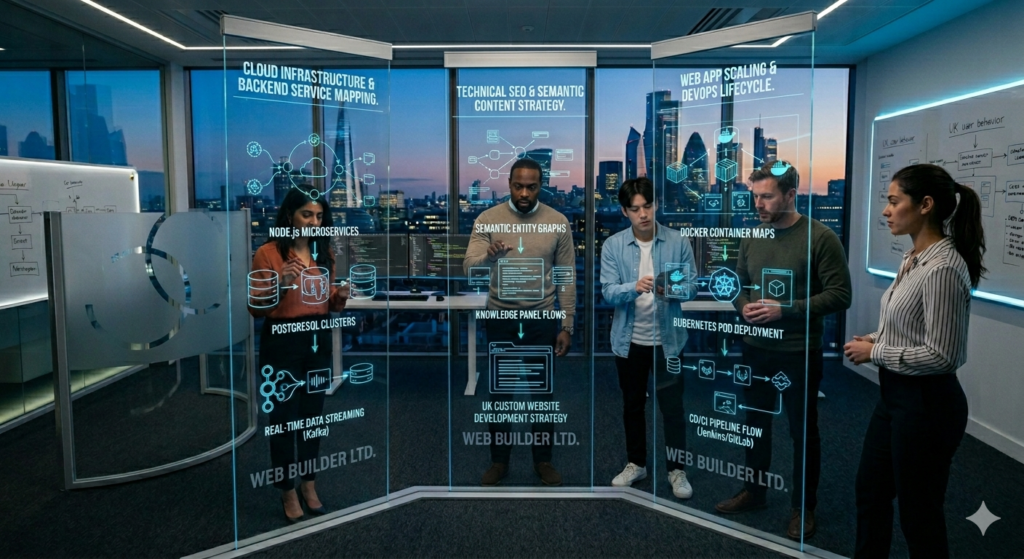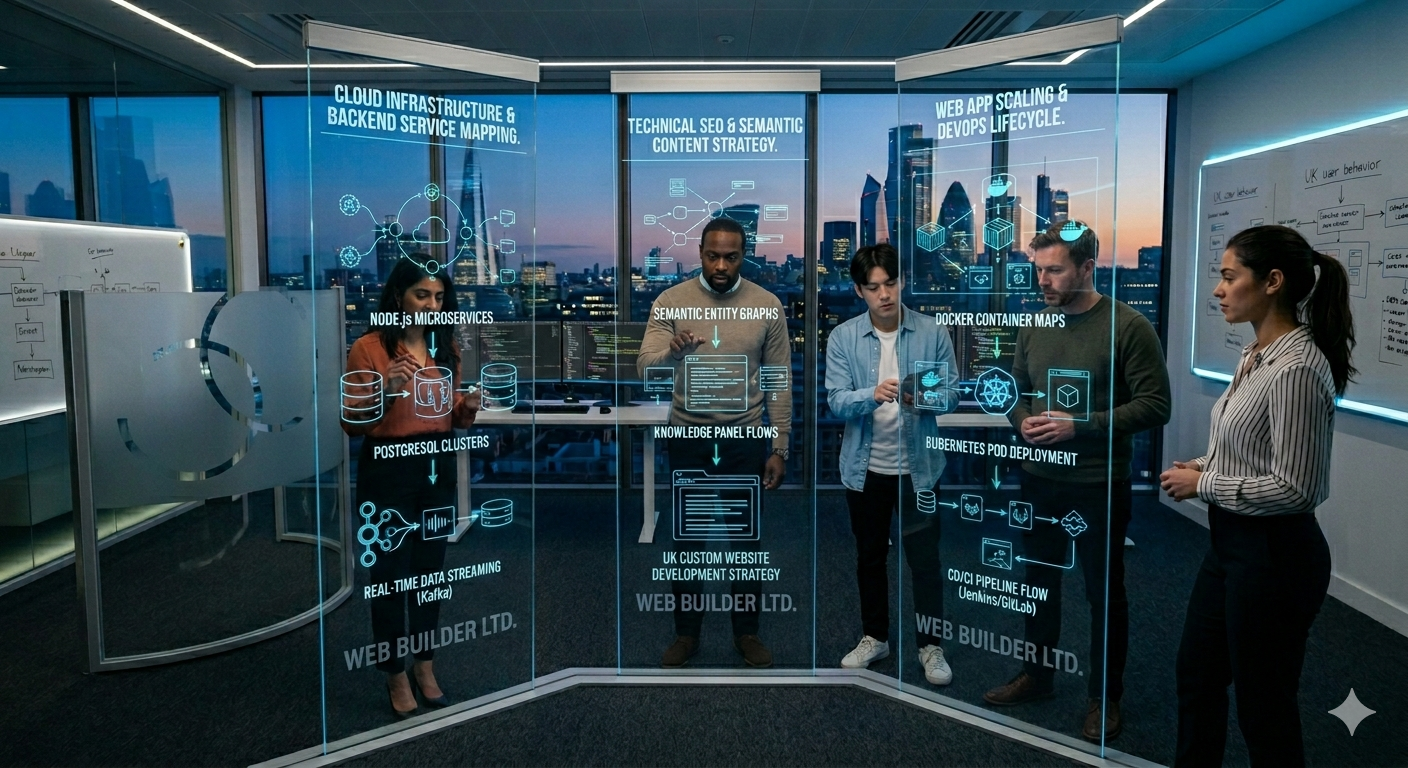
The commercial landscape across the United Kingdom has passed the point where simply "having an online storefront" is enough to stay competitive. Whether your organization operates from the historic financial square mile of the City of London, drives disruptive innovation from the tech hubs of Manchester, or manages logistics from Birmingham, your digital infrastructure is the core engine of your brand valuation, inbound pipeline velocity, and conversion efficiency.
Yet, many UK brands fall into a common corporate trap during procurement. When seeking a custom website build uk, businesses frequently focus entirely on surface-level graphics. They select creative studios that deliver beautiful high-fidelity prototypes built on rigid, mass-market templates or unoptimized visual page builders. While these platforms look pristine on an agency presentation slide, they inevitably introduce severe technical debt, compromise data governance, and damage your organic search engine visibility. True digital authority requires an agency that treats front-end user experience (UI/UX) design and back-end software engineering as a single, unified discipline.
At Web Builder Ltd, we believe that an enterprise-grade digital platform cannot be assembled using generic, one-size-fits-all software. Your operational workflows, data structures, and consumer journeys are entirely unique, meaning your digital infrastructure must be engineered to match. This detailed guide explores how true, engineering-led web development functions, why custom frameworks deliver far superior commercial returns, and how a search-first architecture ensures your company dominates the modern UK search landscape.
Deconstructing True Custom Web Construction: Moving Beyond Theme Modification and Bloated Code
To accurately evaluate what a genuine custom website build in the UK brings to your enterprise, it is vital to understand the technical realities that separate basic web design from advanced software engineering. Many generalist web designers claim to build "bespoke" platforms, but a closer inspection of their source code reveals they are merely skinning pre-made commercial themes or stacking unoptimized plugins on top of standard systems.
An elite full-service digital company builds from an entirely different foundation. We approach web creation through a highly structured dual-phase framework:
1. Psychological UX Wireframing and Strategy
Before writing a single line of code, premium designers map your customer journeys based on behavioral data. We isolate user interactions using heatmaps, competitive search trends, and behavioral analysis. This ensures every navigation route, call-to-action (CTA) button, and information module is placed deliberately to reduce friction, build brand equity, and guide visitors smoothly toward a commercial conversion.
2. Clean, Proprietary Front-End Software Engineering
Once layouts are finalized, software engineers build the front-end user interface using lightweight, hand-coded programming structures rather than restrictive page-builder toolkits. By crafting semantic HTML5, streamlined CSS3 modules, and highly reactive JavaScript architectures, specialized agencies ensure your brand aesthetics load instantly across every single mobile device and desktop display in the UK.
The Strategic Advantages of Bespoke Digital Engineering over Rigid Web Templates
Investing in a completely custom web build is a major strategic decision that influences your retail efficiency, operational margins, and long-term business equity.
1. Seamless API Systems and Operational Automation
Modern UK enterprises run on a complex web of cloud applications to manage daily corporate operations. For your web platform to deliver maximum value, it must sit at the absolute center of this setup as your main data hub. Custom web development enables you to build secure, automated Application Programming Interfaces (APIs) that seamlessly connect your front-facing platform with critical internal tools:
- CRM Frameworks: Automatically collecting, filtering, and pushing high-value inbound leads directly into platforms like Salesforce, HubSpot, or Zoho without manual intervention.
- Financial and ERP Systems: Syncing online payments, corporate billing, and localized multi-currency VAT data instantly with tools like Xero or Sage.
- Fulfillment and Inventory Management: Keeping live stock counts, supply networks, and customer tracking notifications perfectly updated across your distribution network in real time.
By automating these data pipelines, your business completely eliminates manual entry errors, dramatically slashes administrative delays, and frees your staff to focus fully on scaling operations.
2. High-Performance Checkout and User Flow Architecture
The ultimate metric for any online platform is its direct conversion capability. Standard template setups are famously rigid, often forcing buyers through long, confusing multi-step forms that drive cart and inquiry abandonment.
Custom software engineering grants you absolute control over your interactive journeys. We build clean, optimized paths that integrate secure payment gateways like Stripe and Adyen alongside preferred local options such as Apple Pay, Klarna, and Clearpay. By implementing single-click purchasing, automatic address lookups via Postcode APIs, and dynamic calculations based on real-time parameters, you maximize your transaction volume and boost your average order value (AOV).
3. Absolute Data Governance and Legal Compliance
Operating a digital enterprise in the United Kingdom requires strict adherence to stringent financial and data protection standards. Your software must fully comply with the UK General Data Protection Regulation (UK GDPR) and the Data Protection Act 2018.
A bespoke website development company builds security directly into your core code base from day one. By writing proprietary source code, enforcing strict end-to-end data encryption, deploying multi-factor authentication (MFA), and utilizing secure, isolated cloud hosting environments within the UK, your business is shielded from devastating data breaches and severe regulatory fines.
Technical SEO: Why Engineering-First Design Frameworks Outrank the Competition
The UK organic search market is incredibly competitive. Securing a prominent position on Google requires far more than basic keyword placement and periodic blog writing. Your website's underlying software framework must be systematically optimized for search engine bots. This is where a custom-coded architecture gives you an overwhelming competitive advantage.
Core Web Vitals and User Experience Performance
Google explicitly prioritizes website speed, mobile responsiveness, and visual stability through its strict Core Web Vitals assessments. Because custom web designs are completely free from bloated scripts and heavy plugin chains, they naturally load significantly faster than template-driven alternatives.
By utilizing advanced code-splitting, modern image formats (like WebP and AVIF), and global content delivery networks (CDNs), custom platforms deliver the near-instant performance that search algorithms reward with top organic rankings.
Clean Semantic Hierarchy and Efficient Crawl Budgets
Search engine bots have a limited amount of time—known as a crawl budget—to explore, index, and evaluate your website. Template-based sites often force bots to wade through layers of messy, nested code just to find your primary text, wasting valuable crawl limits.
Custom software engineers write clean, semantic HTML that follows a clear structural hierarchy. This makes it incredibly easy for search engine crawlers to understand your content, index your target keywords, and rank your commercial landing pages accurately.
Advanced Structured Schema Markup
To maximize your visibility in competitive UK search results, we embed precise Product, Corporate, and Service Schema markup into the core framework of your site. This structured data allows search engines to display rich snippets directly on search result pages—showcasing your live price points, product availability, star ratings, and location details before a user even clicks through to your site. This significantly increases your organic click-through rates (CTR) and attracts shoppers who are ready to buy.
Selecting Your UK Web Build Partner: Core Questions for Corporate Procurement
Choosing a technical partner to develop your brand's digital flagship is a long-term business decision. To safeguard your investment and guarantee measurable operational growth, look past polished portfolios and ask prospective engineering partners targeted questions:
- Do You Build Exclusive Visual Layouts, or Customize Pre-Existing Themes? Make sure the agency creates a custom design tailored specifically to your conversion goals, rather than adapting a mass-market commercial template.
- How Do Your Front-End Designers and Technical SEO Teams Collaborate? Elite agencies integrate search engine optimization, layout hierarchy, and schema modeling into the codebase from day one, rather than treating technical SEO as a post-launch add-on.
- Can You Provide Verified Business Case Studies Tracking Revenue Impact? Look for clear evidence of how their design work has driven measurable revenue improvements, lowered ad costs, or boosted organic conversions for other UK firms.
- What Hosting and Post-Launch Maintenance Standards Do You Enforce? Complex platforms require ongoing server optimization, security patching, and functional adjustments. Ensure they provide enterprise-grade Service Level Agreements (SLAs) for continuous support.
Frequently Asked Questions
What defines an elite custom website build in the UK compared to standard website templates?
An elite custom website build is coded entirely from scratch tailored to a company’s exact operational processes, database needs, and customer journeys. Standard website templates rely on mass-produced, pre-built frameworks stuffed with redundant, heavy code. Custom engineering results in lightning-fast loading performance, absolute backend flexibility, robust security configurations, and far higher conversion rates.
How does a custom website build impact data security under UK GDPR regulations?
Template websites rely heavily on open-source plugins, which are vulnerable targets for automated data breaches and cyber attacks. Custom-coded web applications use unique, proprietary software structures, advanced end-to-end data encryption protocols, and secure cloud environments based inside the UK, giving you complete data governance and total alignment with strict UK GDPR rules.
Why are custom-built websites inherently better at ranking on organic search engines?
Bespoke web engineering strips away the redundant scripts and hidden code bloat that slows down template websites, allowing your platform to easily pass Google's strict Core Web Vitals checks. Furthermore, clean semantic coding and embedded Schema markup make it effortless for search bots to index your dynamic pages and rank them for competitive keyword queries.
Can a bespoke web platform integrate directly with existing internal software and legacy ERPs?
Yes. An expert website development company can engineer specialized custom APIs and secure middleware layers that connect modern, cloud-based web applications with your legacy internal software tools, databases, or older ERP systems without causing operational downtime.
What programming languages and frameworks do modern enterprise web development agencies use?
For ultra-responsive user interfaces, modern teams utilize powerful front-end environments like React, Vue.js, or Next.js. For back-end logic and database processing, agencies rely on highly scalable frameworks such as Node.js, Python (Django), or PHP (Laravel) connected to secure relational databases like PostgreSQL or MySQL.
What is the average timeline for executing a custom website build in the UK?
Because custom development involves exhaustive discovery phases, bespoke UI/UX wireframing, custom database architecture design, and comprehensive quality testing across multiple platforms, timelines depend on project scope. A specialized minimum viable product (MVP) can take 12 to 16 weeks to build, while complex enterprise systems with deep integrations can require 6 months or more of dedicated engineering.